

Best Dating Apps for Serious Relationships, Ranked
I’ve been in the online dating world long enough to know that not all apps are built the same. Some are designed for quick swipes and casual hookups. Others are genuinely engineered to help you find a partner you’ll still want to talk to in ten years. The difference matters — a lot. If you’re tired of wasting time on apps that feel like a slot machine, this ranking is for you. I looked at which apps actually produce long-term relationships, not just matches, and ranked them based on real user outcomes, features, and who each platform works best for.
Are Dating Apps Actually Good for Finding Serious Relationships?
Short answer: yes, but only if you’re on the right one. A 2023 Stanford study found that roughly 39% of heterosexual couples in the U.S. now meet online — more than through friends, work, or bars combined. That number keeps climbing.
The problem isn’t dating apps in general. The problem is using a casual-focused app when you want something real. Tinder’s algorithm is optimized for engagement, not compatibility. That’s a fundamentally different goal than what you’re after.
The apps I’m ranking below are specifically built — or heavily used — by people who want commitment. That changes everything from the profile setup to the matching logic.
Which Dating App Has the Best Track Record for Long-Term Relationships?
eHarmony is the gold standard here. It’s been around since 2000, and its compatibility model is built on a 32-dimension personality assessment developed by clinical psychologist Dr. Neil Clark Warren. Sounds intense — because it is.
eHarmony claims that 2.3 million couples have married after meeting on the platform. I can’t independently verify every one of those, but the methodology is genuinely different from swipe-based apps. You don’t browse freely; the algorithm sends you curated matches daily.
The downside? It’s expensive. Premium plans run $35–$65/month depending on the subscription length. But if you’re serious about finding a partner, that’s less than two dinners out.
Is Hinge Actually the App “Designed to Be Deleted”?
Hinge markets itself as the app designed to be deleted — meaning it wants you to find someone and leave. That’s a bold promise, and honestly, it mostly delivers.
What makes Hinge different is the profile structure. Instead of a bio and photos, you answer prompts like “The most spontaneous thing I’ve done is…” or “I’m looking for someone who…” These prompts force personality to come through in a way that a selfie never can.
Hinge’s internal data (published in 2024) shows that 3 out of 4 first dates from Hinge lead to a second date. That’s a meaningful stat. It suggests the matching quality is genuinely higher than swipe-heavy competitors.
Hinge works best for people in their mid-20s to late 30s who want something real but aren’t ready for the clinical intensity of eHarmony. It’s the sweet spot for a lot of people.
How Does Bumble Compare for People Who Want Commitment?
Bumble gets a lot of credit for its “women message first” rule, which does filter out a certain type of low-effort user. But here’s what most people miss: Bumble has a dedicated Bumble For Serious Relationships mode that you can toggle on in your profile settings.
When you enable it, your profile signals to other users that you’re not here to mess around. It doesn’t change the algorithm dramatically, but it does attract people with similar intentions — which matters more than most people realize.
Bumble also has Bumble BFF and Bumble Bizz built into the same app, which tells you something about its broader philosophy. It’s a social platform first, dating app second. That’s not necessarily bad, but it does mean the pool is more mixed in terms of intent.
My honest take: Bumble is great for serious daters who are also social and communicative. If you’re introverted or prefer the other person to make the first move, it might frustrate you.
What About Match.com — Is It Still Worth Using in 2026?
Match.com is the original. It launched in 1995, and yes, it’s still relevant. The user base skews slightly older (late 20s through 50s), which actually works in your favor if you’re past the party phase of life.
What Match does well is intent filtering. The platform asks upfront whether you want something casual, a relationship, or marriage. People who pay for Match (plans start around $20/month) are generally more serious than free-app users — there’s a self-selection effect that works in your favor.
Match also has a feature called “Missed Connections” that shows you people you’ve crossed paths with in real life. It’s a small feature, but it’s the kind of thoughtful design that shows Match is still innovating rather than coasting on its legacy.
The user interface feels dated compared to Hinge or Bumble. But if you can get past the 2015-era design, the substance is solid.
Should You Try OkCupid If You Want Something Long-Term?
OkCupid is underrated for serious relationships, and I think it’s because people associate it with its free tier and assume it’s casual. That’s not accurate anymore.
OkCupid’s matching system is built on questions — hundreds of them, covering values, lifestyle, politics, religion, and relationship style. You answer questions, weight how important each answer is to you, and the algorithm calculates compatibility percentages. It’s genuinely sophisticated.
The platform also lets you filter matches by dealbreakers — things like whether someone wants kids, their stance on monogamy, or whether they smoke. These filters save you from wasting time on incompatible matches before you even say hello.
OkCupid works best for people who are thoughtful about what they want and willing to invest time in their profile. If you rush through the setup, you’ll get mediocre results. Put in the work and it pays off.
Is Hinge or eHarmony Better for People Over 40?
This is a question I get a lot. Here’s my honest breakdown:
- eHarmony is better for people over 40 who are ready for marriage or a serious long-term partnership. The depth of the matching process attracts people who are done playing games.
- Hinge skews younger (25–38 is the sweet spot), so the pool thins out significantly once you’re past 45.
- Match.com is probably the best all-around option for the 40+ crowd — large user base, serious intent, and age-appropriate matches.
- OurTime is worth mentioning here — it’s specifically designed for singles over 50 and has a strong reputation for producing real relationships in that demographic.
Age matters more than people admit when choosing a dating app. Using the wrong platform for your age group is like fishing in the wrong pond.
What Features Should You Look for in a Serious Relationship App?
Not all features are created equal. Here’s what actually matters if you’re looking for commitment:
- Detailed profiles — Apps that force users to write about themselves attract more self-aware, communicative people
- Intent settings — The ability to signal (and filter by) relationship goals is non-negotiable
- Compatibility scoring — Algorithms that go beyond physical attraction and factor in values, lifestyle, and personality
- Paid tiers — Not because money equals quality, but because paying users are statistically more serious
- Video features — Apps with video calling built in (like Hinge’s video prompts) help you screen faster and more accurately
What you can mostly ignore: super-likes, boosts, and other engagement gimmicks. Those are designed to make the app money, not to help you find love.
My Final Ranking and Recommendation
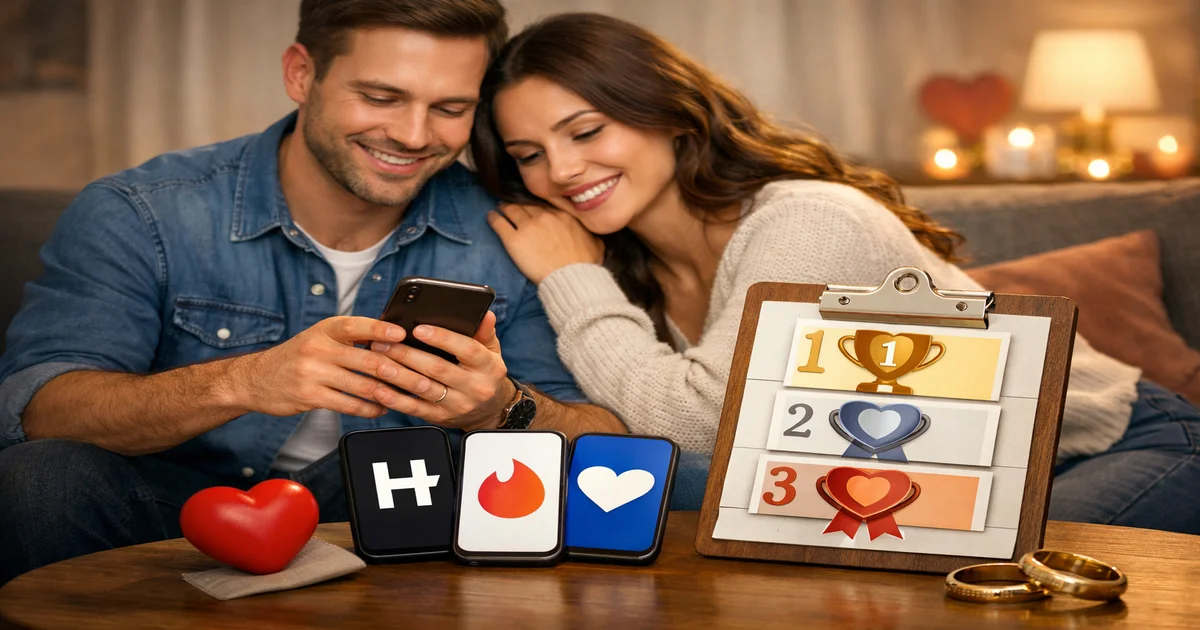
Here’s how I’d rank them if you’re genuinely looking for a long-term relationship:
- eHarmony — Best for people ready for marriage or a serious multi-year commitment
- Hinge — Best for 25–38 year olds who want real connection without the clinical intensity
- Match.com — Best all-rounder, especially for the 35–55 age range
- OkCupid — Best for values-driven matching and filtering by dealbreakers
- Bumble — Best for confident, communicative people who want commitment with a modern feel
The app you’ll actually use consistently is the right app for you — so pick one that fits your personality and commit to it for at least 60 days before judging results. Jumping between apps every two weeks is one of the biggest mistakes serious daters make.
Perguntas Frequentes
Which dating app leads to the most marriages?
eHarmony claims 2.3 million couples married after meeting on the platform, making it the top contender for marriage-focused daters by a wide margin.Is Hinge better than Tinder for serious relationships?
Yes, significantly. Hinge’s prompt-based profiles and relationship-intent filters attract users looking for commitment, while Tinder’s design skews toward casual interactions.How long does it take to find a serious relationship on a dating app?
Most relationship coaches suggest giving any app 60–90 days of consistent, active use before evaluating results. Passive swiping rarely works — you need to initiate conversations.Are paid dating apps worth it for finding a long-term partner?
Generally yes. Paid users self-select as more serious, and premium features like advanced filters and read receipts genuinely improve your experience on most platforms.What is the best dating app for people over 50 who want a relationship?
Match.com and OurTime are the strongest options for the 50-plus crowd. OurTime is specifically built for that demographic, while Match offers a larger overall user pool.
