

Can the Underdogs Shock Everyone This NBA Season?
Every NBA season brings its share of surprises, but this year’s landscape appears particularly ripe for dramatic underdog stories as several overlooked teams have assembled the perfect combination of emerging talent, innovative coaching, and team chemistry that could potentially upend the established hierarchy.
The Rise of Small-Market Challengers
Small-market teams have historically struggled to attract superstar free agents, often relegating them to perpetual rebuilding cycles that test even the most loyal fanbases’ patience.
However, franchises like the Memphis Grizzlies and Sacramento Kings have demonstrated that exceptional drafting, player development, and cultural cohesion can create competitive advantages that overcome financial limitations imposed by market size.
The Oklahoma City Thunder represent perhaps the most intriguing case study, having accumulated an unprecedented treasure trove of draft assets while simultaneously developing one of the league’s most exciting young cores around Shai Gilgeous-Alexander.
Strategic Coaching Innovations Changing the Game
Underdog teams are increasingly employing coaching staffs willing to implement unconventional strategies that maximize their specific roster strengths rather than attempting to replicate championship formulas designed for different personnel.
These tactical innovations include embracing extreme pace variations, deploying unique defensive schemes tailored to specific personnel strengths, or implementing offensive systems that prioritize efficiency over traditional positional basketball.
Coaches like J.B. Bickerstaff in Cleveland have demonstrated how defensive identity can transform a lottery team into a legitimate playoff contender when the tactical approach aligns perfectly with the available talent.
Young Stars Ready for Their Breakout Moment
The current NBA features perhaps its deepest pool of young talent in decades, with numerous potential superstars developing on teams that haven’t traditionally dominated headlines or championship conversations.
Players like Anthony Edwards (Minnesota), Tyrese Haliburton (Indiana), and Jalen Williams (Oklahoma City) possess the rare combination of individual brilliance and leadership qualities that can accelerate a team’s competitive timeline beyond conventional expectations.
These emerging stars benefit from playing in systems specifically designed to amplify their strengths while providing the developmental runway necessary to grow through inevitable mistakes without the crushing pressure faced by young players on established contenders.
The Impact of Improved Team Chemistry
Championship teams consistently cite chemistry as a crucial yet immeasurable ingredient in their success, with underdog squads often developing stronger bonds through shared experiences of being overlooked and underestimated by the broader basketball community.
Teams like the Orlando Magic have invested heavily in creating cultural alignment throughout their organization, prioritizing character in their draft evaluations and acquisition decisions even when more talented but potentially disruptive options were available.
The Indiana Pacers exemplify how quickly team chemistry can translate to on-court success, with their unselfish playing style and clear role definition helping them outperform expectations despite lacking the star power of traditional contenders.
Health Advantages in a Grueling Season
The modern NBA’s compressed schedule and increased physical demands create significant opportunities for well-conditioned teams with strategic load management approaches to gain competitive advantages over more talented but injury-prone competitors.
Underdog teams with younger rosters often benefit from superior recovery capabilities and fewer accumulated minutes, particularly during the season’s final stretch when veteran-heavy contenders may be preserving energy for playoff runs.
Organizations investing in cutting-edge sports science departments, recovery facilities, and preventative medical approaches may find themselves with availability advantages that effectively narrow talent gaps during crucial late-season matchups.
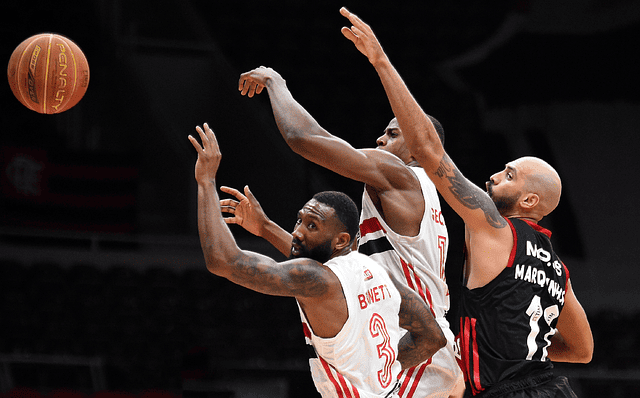 Source: Pixabay
Conclusion
The potential for underdog success in this NBA season represents one of the most compelling narratives for basketball fans seeking stories beyond the established championship favorites dominating preseason conversations.
Historical precedent suggests that at least one team currently flying under the radar will make a substantial leap forward, challenging conventional wisdom about their ceiling and injecting fresh energy into the playoff picture through their unexpected emergence.
The combination of innovative coaching, emerging star talent, strong team chemistry, and strategic health management creates a perfect environment for basketball’s version of David to challenge multiple Goliaths throughout this unpredictable and potentially transformative NBA season.
Frequently Asked Questions
Which underdog NBA team has the best chance to make the conference finals this season?
The Memphis Grizzlies represent the strongest underdog candidate with their combination of defensive identity, depth, and Ja Morant’s superstar ceiling when healthy.Can small-market NBA teams compete financially with large-market franchises?
While small markets face revenue disadvantages, the salary cap, draft advantages, and player development systems create pathways for competitive balance despite market size disparities.What’s the biggest factor that turns an NBA underdog into a legitimate contender?
The emergence of a genuine top-15 player represents the most transformative element, as evidenced by how Shai Gilgeous-Alexander’s leap immediately accelerated Oklahoma City’s competitive timeline.How do coaching strategies differ between underdog teams and established contenders?
Underdog coaches typically implement more creative, risk-tolerant systems designed to create variance and strategic advantages, while contenders often prioritize consistency and execution.Are there historical examples of true NBA underdogs winning championships?
The 2004 Detroit Pistons and 2011 Dallas Mavericks stand as the premier examples of teams overcoming significant talent disadvantages through exceptional coaching, chemistry, and strategic execution.
