

Is Hinge Preferred Membership Worth the Cost?
I paid for Hinge Preferred for three months straight, and I have some opinions. Not the kind you’d find in a press release — real ones, formed after swiping through hundreds of profiles and watching my match rate fluctuate week by week.
TL;DR
- Hinge’s “see who liked you” skips cold outreach — mutual interest already confirmed before messaging.
- Unlimited likes only matter in small cities; 8-like free cap rarely bites in NYC or LA.
- Try Hinge free 2–3 weeks; upgrade to Preferred ($34.99/month) only after profile gets traction.
The short answer is: Hinge Preferred is worth it for some people and a complete waste of money for others. Let me tell you exactly which category you fall into.
Hinge has positioned itself as the dating app “designed to be deleted” — meaning it’s built for people who want real relationships, not endless casual swiping. That’s a bold claim. But does paying for Preferred actually help you find that relationship faster, or does it just drain your wallet while you wait for someone to like your carefully chosen prompt?
What Do You Actually Get With Hinge Preferred?
The free version of Hinge isn’t bad. You get a full profile, the ability to send likes with comments, and a daily stack of suggested profiles. But Preferred unlocks a few things that genuinely change how the app works.
Here’s what you get with a Preferred subscription:
- Unlimited likes — Free users are capped at 8 likes per day
- See who liked you — You can browse everyone who’s already liked your profile before deciding to match
- Advanced filters — Filter by height, religion, ethnicity, family plans, and relationship type
- Roses — Everyone gets one free Rose per week regardless of subscription, so this isn’t a Preferred-only perk
- Read receipts — Know when someone has seen your message
- Activity status — See when someone was last active on the app
The unlimited likes alone sounds like a game-changer. But here’s what I actually found after using it.
Does Unlimited Likes Actually Help You Match More?
Honestly? Less than you’d think. The 8-like daily limit on the free version sounds restrictive, but most people don’t even hit it consistently. If you’re being selective — which Hinge actually encourages — 8 likes a day is plenty.
Where unlimited likes helps is if you’re in a smaller city with a limited dating pool. You can cast a wider net without waiting until midnight for your likes to reset. In a major metro like New York, Chicago, or LA, you’ll probably never feel the cap anyway.
The real value of unlimited likes is psychological. You stop feeling rushed. You take more time reading profiles and writing thoughtful comments instead of panic-liking before your daily reset.
Is “See Who Liked You” Worth Paying For?
This is the feature that actually moved the needle for me. On the free version, you see blurred-out silhouettes of people who’ve already liked your profile. You can’t see who they are unless you match with them by coincidence.
With Preferred, you can browse that list and choose who to match with. This flips the entire dynamic of the app in your favor — instead of hoping someone sees your profile, you’re selecting from people who already want to connect.
In practice, I found this feature cut my time-to-conversation down significantly. Instead of sending likes into the void and waiting, I was responding to people who had already expressed interest. The quality of those conversations was noticeably higher too, because there was mutual interest from the start.
If you’re getting a decent number of likes on your profile, this feature alone might justify the subscription cost.
Are the Advanced Filters Actually Useful?
Here’s where I’ll be blunt — the advanced filters are useful, but only if you have strong preferences that the basic filters don’t cover. The free version already lets you filter by age, distance, and a few basics. Preferred adds filters like:
- Height (if that matters to you)
- Religion and how religious someone is
- Whether they want kids
- Relationship type (monogamous, non-monogamous, etc.)
- Ethnicity
The kids filter is genuinely important for a lot of people. If you’re 35 and you know you want children, filtering out profiles of people who don’t want kids saves real time and emotional energy. Same goes for relationship type — if you’re looking for something exclusive, you can filter out people who aren’t.
But if you’re relatively open-minded about these factors, the advanced filters won’t change your experience much. They’re a power tool for people with specific requirements, not a universal upgrade.
What About Read Receipts and Activity Status?
I’ll be honest — read receipts stressed me out more than they helped. Knowing someone read your message and didn’t respond is useful information, but it’s also the kind of information that makes you overthink everything.
Activity status is more practically useful. If someone was last active three weeks ago, you know not to invest energy crafting a perfect opening message. It helps you prioritize who’s actually using the app versus who downloaded it six months ago and forgot about it.
Neither of these features is a reason to subscribe on its own. They’re nice-to-haves that add a layer of information, not features that fundamentally improve your results.
How Much Does Hinge Preferred Cost in 2026?
Pricing has shifted slightly over the years, but as of 2026, Hinge Preferred runs approximately:
- $34.99/month for a single month
- $20.83/month when billed as a 3-month plan ($62.49 total)
- $16.67/month when billed as a 6-month plan ($99.99 total)
That’s not cheap. For context, Tinder Gold runs around $29.99/month and Bumble Premium is in a similar range. Hinge Preferred sits at the higher end of the dating app subscription market.
The 6-month plan is the only one that makes financial sense if you’re committed to using it seriously. Paying month-to-month is expensive for what you get. But committing to six months also means you’re betting on the app working for you — which isn’t guaranteed.
Hinge Preferred vs. Free — Who Should Actually Pay?
Let me break this down clearly, because the answer isn’t the same for everyone.
Pay for Preferred if:
- You’re getting a solid number of profile likes and want to see who they are
- You live in a smaller city where the dating pool is limited and unlimited likes matter
- You have specific dealbreakers (kids, religion, relationship type) that advanced filters can screen for
- You’re actively dating and using the app daily
Stick with the free version if:
- You’re in a major city with plenty of profiles to browse
- You’re not getting many likes yet (the problem is your profile, not your subscription tier)
- You’re casually exploring the app without serious intent
- You’ve only been on the app for a few weeks
Here’s the thing most people miss — if your profile photos aren’t strong or your prompts are generic, paying for Preferred won’t fix that. The algorithm still needs something to work with. Before spending money on a subscription, spend time on your profile.
Does Hinge Preferred Actually Help You Find a Relationship?
This is the real question, right? And the honest answer is: it depends on factors the subscription can’t control.
Preferred gives you better tools. It doesn’t give you better matches. The quality of people on Hinge is the same whether you’re paying or not — you’re just accessing them more efficiently with a subscription.
According to Hinge’s own data from 2024, Preferred members go on more dates than free users. But correlation isn’t causation. People who pay for dating apps are often more motivated and intentional about dating, which means they’d probably do better regardless of which tier they’re on.
What I can say from personal experience is that the “see who liked you” feature genuinely saved time and improved conversation quality. The other features were nice but not transformative.
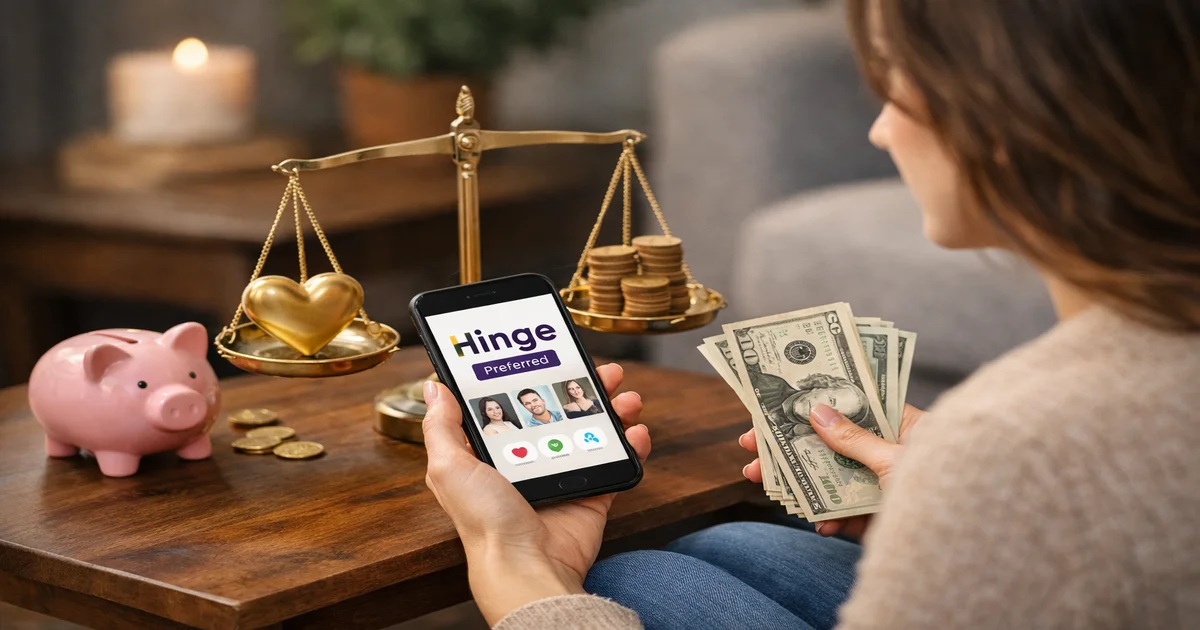
Is There a Better Alternative to Hinge Preferred?
If you’re serious about finding a relationship and willing to pay, it’s worth knowing what else is out there. Hinge isn’t the only player in this space.
Hinge Preferred vs. competitors:
- Match.com — Older demographic, more relationship-focused, similar price point. Better if you’re 35+.
- eHarmony — More expensive but uses compatibility matching. Good for people who want structure.
- Bumble Premium — Similar features to Preferred, but women message first which changes the dynamic entirely.
- Tinder Gold — Larger user base, but skews more casual. Less ideal for serious relationship seekers.
For most people in their mid-20s to mid-30s looking for something real, Hinge is still one of the best options. The app’s design genuinely encourages more thoughtful interaction than swipe-heavy competitors. Preferred just makes an already good app work faster for you — it doesn’t make a mediocre app good.
Conclusion
Here’s my honest take after three months of paying for it: Hinge Preferred is worth trying for one month if you’re actively dating and your profile is already solid. The “see who liked you” feature is genuinely useful. The unlimited likes matter more in smaller cities. The advanced filters are valuable if you have specific requirements. But if you’re new to Hinge, start with the free version for two to three weeks first. Get your profile dialed in. See how many likes you’re getting organically. If you’re getting traction and want to accelerate, then upgrade.
Frequently Asked Questions
-
How much does Hinge Preferred cost per month in 2026?
Hinge Preferred costs approximately $34.99 for a single month, or as low as $16.67 per month on the 6-month plan billed at $99.99. -
Can you see who liked you on Hinge without paying?
No. Free users see blurred silhouettes of people who liked them. You need a Preferred subscription to see exactly who liked your profile. -
Is Hinge better than Tinder for serious relationships?
Generally yes. Hinge’s prompt-based profiles and comment-required likes encourage more intentional interaction, making it better suited for people seeking something real. -
Does Hinge Preferred increase your matches?
It can, especially through the “see who liked you” feature. But match quality depends on your profile — Preferred improves access, not the profile itself. -
Is it worth paying for Hinge if you live in a small city?
More so than in a big city. Unlimited likes and advanced filters matter more when the local dating pool is smaller and you need to maximize every potential connection.