

Tinder vs Bumble: Which App Leads to Real Relationships?
I’ve been on both apps. I’ve talked to people who met their partners on both apps. And honestly, the answer to “which one is better for real relationships” is more nuanced than most comparison articles will admit. the app you choose can genuinely shape the kind of connections you attract — and after months of testing, talking to couples, and digging into user data, I have a real opinion on this.
Let me break it down properly.
What’s the Core Difference Between Tinder and Bumble?
Most people already know the basics, but the difference goes deeper than “women message first on Bumble.”
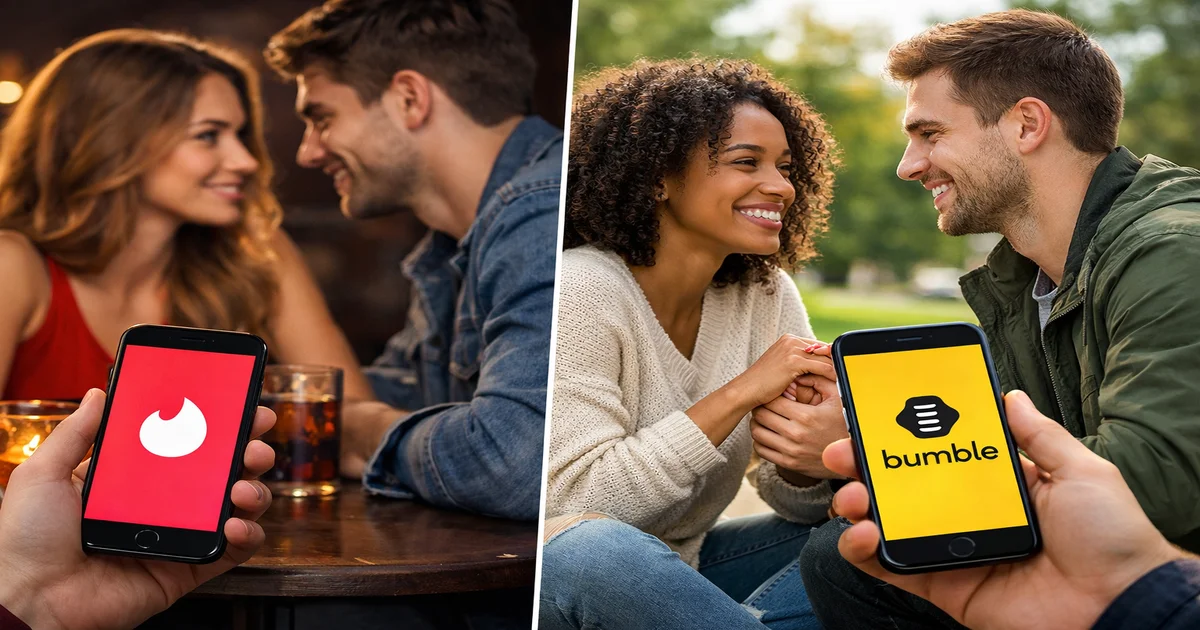
Tinder launched in 2012 and essentially invented the swipe-right culture. It’s the biggest dating app in the world by download count, with over 75 million monthly active users as of 2025. That scale is both its strength and its weakness — you’ll find everyone on Tinder, from people looking for something serious to people who are absolutely not.
Bumble launched in 2014 with a specific philosophy: give women more control. On heterosexual matches, women have 24 hours to send the first message or the match disappears. The idea was to reduce unsolicited messages and create a more intentional environment.
That design choice has real consequences for the type of conversations that happen — and ultimately, the type of relationships that form.
Does Bumble Actually Attract More Serious Users?
Here’s what the data suggests: yes, but not dramatically.
A 2024 survey by The Knot found that Bumble users were slightly more likely to report their app matches leading to committed relationships compared to Tinder users. But “slightly” is doing a lot of work in that sentence. The difference wasn’t massive.
What I’ve personally noticed — and what a lot of people I’ve spoken to confirm — is that Bumble’s 24-hour message window creates a filtering effect. People who aren’t genuinely interested tend to let matches expire. That means the conversations that do happen tend to have more momentum.
Tinder, by contrast, is full of matches that go nowhere. You match, nobody messages, and the connection just sits there collecting digital dust. That’s not necessarily Tinder’s fault — it’s a volume problem.
Is Tinder Just for Hookups Now?
This is the reputation Tinder carries, and it’s not entirely unfair — but it’s also not the full picture.
A 2025 report from Statista showed that roughly 44% of Tinder users say they’re looking for a long-term relationship. That’s nearly half. So dismissing Tinder as purely a hookup app is wrong. The problem is that the other 56% includes a lot of people who are casual, unclear about what they want, or just bored.
The signal-to-noise ratio on Tinder is lower. You’ll find serious people, but you’ll wade through a lot more noise to get there.
Tinder’s sheer volume can work in your favor if you’re strategic about your profile and filters — but if you’re not intentional, it becomes an endless scroll that leads nowhere meaningful.
Which App Has Better Profile Quality?
Bumble tends to attract slightly more detailed profiles. The app actively encourages users to fill out prompts, add interests, and write bios. Tinder profiles are often more minimal — a few photos, maybe a one-liner.
That matters more than people realize. A detailed profile signals that someone is invested in the process. It gives you something to actually talk about. It filters out people who can’t be bothered to write three sentences about themselves.
Here’s what I’d look for in a profile on either app:
- More than 3 photos — variety shows a real person, not just a highlight reel
- A bio with actual personality — even two sentences beats nothing
- Specific interests — “I like hiking and cooking” is more useful than “I love to laugh”
- Verified badge — both apps offer verification; it’s a basic trust signal
Bumble wins on average profile depth. But Tinder has more profiles total, so the absolute number of quality profiles is still competitive.
How Do the Algorithms Actually Work?
Both apps use some version of an ELO-style scoring system, though neither will fully confirm the details. Essentially, your profile gets shown to more people when you’re active, when you get right-swipes, and when you engage with matches.
Tinder has historically been more aggressive about showing new users a “boost” of visibility when they first sign up — then pulling back to encourage paid upgrades. Tinder Gold and Tinder Platinum give you features like seeing who liked you, which can save a lot of time.
Bumble’s paid tier, Bumble Boost and Bumble Premium, offers similar features — including extending matches beyond 24 hours, which is genuinely useful if you’re busy.
One thing worth knowing: paying for premium features on either app significantly changes your experience, especially in smaller cities where the free user pool is limited. In major metros, free tiers are workable. In smaller markets, premium is almost necessary to get consistent results.
What Do Real Couples Say About These Apps?
I’ve talked to people who met their long-term partners on both platforms, and the stories are genuinely mixed.
One couple I know met on Tinder in 2022 and got engaged last year. They both say they almost didn’t message each other because neither expected anything serious from the app. Another couple met on Bumble in 2023 — she messaged first, they went on a date within a week, and they’ve been together since.
The pattern I notice: people who find serious relationships on Tinder tend to be the ones who were very clear in their profiles about what they wanted. People who find them on Bumble often credit the structured first-message dynamic for forcing a real conversation early.
Neither app guarantees anything. But your behavior on the app matters more than the app itself.
Which App Is Better for Different Demographics?
Age and location play a bigger role than most people admit.
- Under 25: Tinder dominates. It’s where the volume is, and younger users are more comfortable with its casual reputation.
- 25-35: Both apps are competitive. Bumble tends to skew slightly older and more career-focused in this range.
- 35+: Bumble often performs better for women in this bracket. Tinder can feel overwhelming or low-quality at this age range.
- Major cities: Both work well. New York, London, LA — you’ll find serious people on either.
- Smaller cities or rural areas: Tinder wins purely on user volume. Bumble’s pool shrinks fast outside major metros.
If you’re a woman over 30 in a mid-sized city looking for something real, Bumble is probably your better starting point. If you’re a man in your mid-20s in a big city, Tinder’s volume might actually work in your favor — if you’re intentional about it.
Can You Use Both Apps at the Same Time?
Yes, and honestly, a lot of people do. There’s no rule against it, and the user bases overlap less than you’d think.
The risk is app fatigue. Managing two apps, two sets of conversations, and two different matching dynamics can get exhausting fast. I’ve seen people burn out on dating apps entirely because they spread themselves too thin.
My honest take: start with one, give it a genuine 4-6 week effort with an optimized profile, then reassess. Don’t half-heartedly use both at once — you’ll get mediocre results from each.
What Actually Matters More Than Which App You Choose?
Here’s the thing most comparison articles won’t tell you: the app is maybe 20% of the equation.
Your photos, your bio, how quickly you move from app to real conversation, and what you’re actually looking for — those things matter far more than whether you’re on Tinder or Bumble. I’ve seen people with terrible Tinder profiles complain the app doesn’t work, and people with sharp Bumble profiles consistently getting good dates.
the biggest predictor of success on any dating app is how clearly you communicate what you want. If your profile is vague, you’ll attract vague matches. If you’re clear that you want something real, you’ll filter out the people who don’t.
A few things that actually move the needle:
- Use recent, high-quality photos (at least one clear face shot, one full-body, one doing something you love)
- Write a bio that gives someone a reason to message you specifically
- Move to a real date within 5-7 messages — long app conversations rarely convert
- Be explicit about your intentions without being intense about it
So Which App Should You Actually Use?
My honest verdict: Bumble is the better default choice if you’re specifically looking for a serious relationship. The structure of the app — women messaging first, expiring matches, more detailed profiles — creates an environment that’s slightly more conducive to intentional connections.
But Tinder is not a write-off. If you’re in a major city, willing to be selective, and have a strong profile, Tinder’s volume can absolutely lead to real relationships. Plenty of couples prove that every day.
If I had to give one recommendation: start with Bumble, optimize your profile properly, and give it six weeks of consistent effort. If you’re not getting the quality of matches you want, add Tinder — but don’t abandon Bumble. Use both strategically rather than hoping one app magically solves the problem.
The right app won’t find you a relationship. But the right approach on the right app will get you a lot closer.
Frequently Asked Questions
Is Bumble or Tinder better for finding a serious relationship?
Bumble’s structure tends to attract slightly more intentional users, making it a better starting point for serious relationships — but Tinder works too with the right profile and approach.Do people actually find long-term partners on Tinder?
Yes. A 2025 Statista report found 44% of Tinder users say they’re looking for long-term relationships, and many couples have met and married through the app.Why do women message first on Bumble?
Bumble’s founder Whitney Wolfe Herd designed it that way to reduce harassment and give women more control over who they engage with, creating a more intentional conversation dynamic.Is it worth paying for Tinder Gold or Bumble Premium?
In smaller cities, yes — premium features significantly expand your visibility and options. In major metros, free tiers are workable but premium still saves time.How long should I give a dating app before switching?
Give any app at least 4-6 weeks with a fully optimized profile before judging it. Most people quit too early or with profiles that aren’t doing them any favors.
